I’ve spent 15 years as a certified personal trainer, working closely with many older adults. One of the very first movements I introduce to clients aged 65 and above is the chair squat.
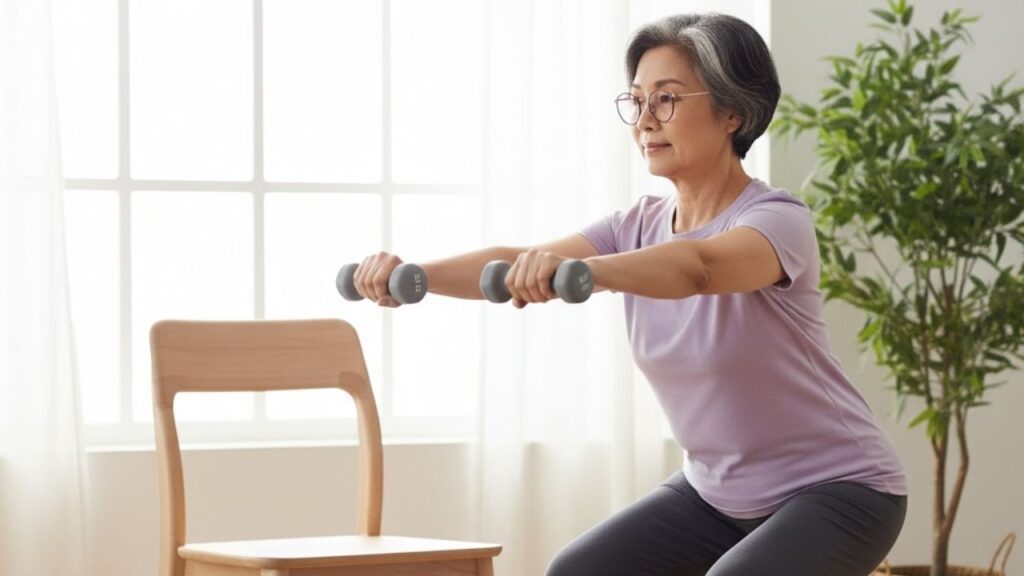
This simple exercise helps build strength in the legs, hips, and core, while also supporting better balance and coordination. It’s easy to adjust, making it suitable for beginners and adaptable as strength improves.

Who Can Do Chair Squats?
If you have a chair nearby, you can perform chair squats too. They are safe and effective for beginners of all ages, not just seniors.

Before starting any new exercise routine, it’s important to check with your healthcare provider, especially if you have existing medical conditions.
What You’ll Need
You won’t need any special equipment beyond a sturdy chair. Depending on your mobility or injury history, you may also benefit from a clear wall or a second chair for added stability.
Recommended Reps and Progression
If you’re new to chair squats, start with 1 set of 5 repetitions. As your strength improves, gradually increase to 12 reps per set. From there, build up slowly until you can comfortably complete 3 sets of 10–12 reps.
 After 70 It’s Not Walking or Gym Sessions This Specific Movement Pattern Truly Upgrades Healthspan
How to Perform a Chair Squat
- Stand with your feet hip-width apart, positioning a chair directly behind you.
- Lift your arms forward until they reach shoulder height.
- Push your hips back and bend your knees, slowly lowering yourself toward the chair.
- Lightly tap your hips on the seat, then press through your feet to return to standing.
- Repeat for your chosen number of repetitions.
Trainer Tips for Better Form
- Initiate the movement from your hips, not your knees.
- Imagine pushing your hips back as if you’re closing a car door behind you.
- If you’re just starting out, feel free to sit fully on the chair before standing again.
- Use a wall or a second chair in front of you for extra balance support if needed.
- Once the movement feels easy, increase difficulty by holding a dumbbell, using a lower chair, or removing the chair altogether.
Benefits of Chair Squats
Like traditional bodyweight squats, chair squats strengthen key lower-body muscles such as the quadriceps, hamstrings, glutes, and hip muscles. The chair limits range of motion and acts as a safety guide, reducing the risk of poor form or injury.
This movement also supports everyday functional strength, making daily tasks like standing up from a couch, getting out of a car, or rising from the toilet much easier.
In addition, chair squats can help enhance balance, bone density, and overall confidence, making them an accessible and effective form of resistance training for nearly all ability levels.