
You tug at the edge, it rips slightly off-line, you mutter under your breath and wrap the leftovers anyway. Shiny or dull, it doesn’t seem to matter—everything ends up in the fridge. Minutes later, while scrolling on your phone, another “life hack” video appears, insisting you’ve been using aluminium foil wrong all along. You pause, amused but doubtful. Can a simple roll of foil really change how we cook?
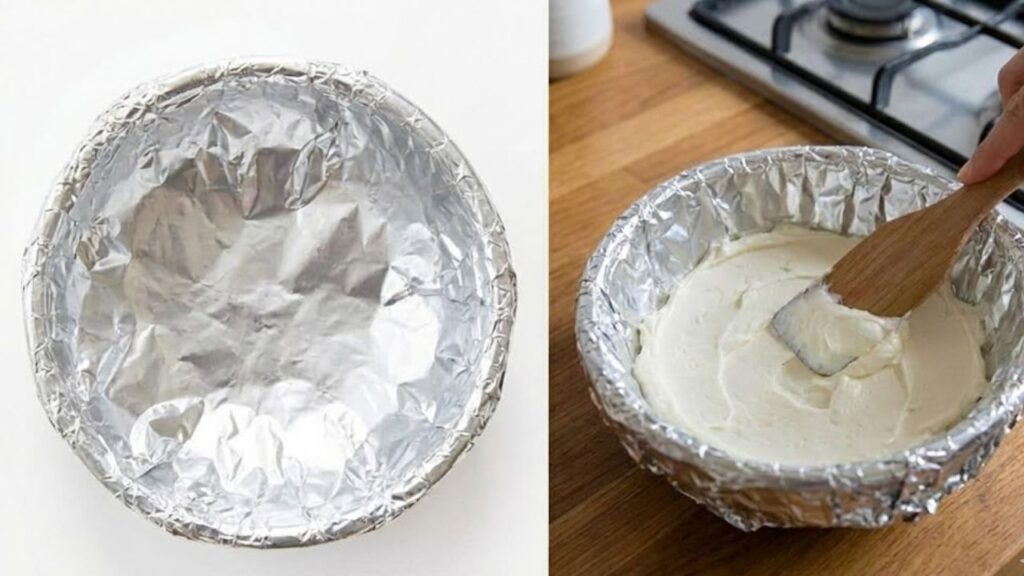
Later that evening, someone casually remarks at the table, “You know the shiny side and the dull side don’t do the same thing, right?” Conversation halts. Forks hover. One side of the table argues for shiny side in, the other swears by shiny side out. Someone mentions their grandmother’s “method.” Another shrugs—food is food. Suddenly, under the kitchen lights, an ordinary object feels oddly intriguing.

What if this everyday item has been doing more than we ever noticed?

Shiny or Dull: What’s Actually Happening With Aluminium Foil?
Take a closer look at a sheet of aluminium foil. One side gleams like a mirror, the other appears soft and matte. We’re so familiar with this contrast that we rarely question it. We tear, wrap, crumple, and move on. That shiny surface has probably covered more leftovers than any other kitchen tool you own.
Behind that unassuming roll, however, is a story shaped by industrial pressure, heat, and basic physics.
Manufacturers don’t polish one side for decoration. During production, two layers of aluminium are rolled together through heavy steel rollers. The side pressed against the rollers becomes shiny, while the inner side stays dull. There’s no coating, no chemical treatment—just metal compressed at high pressure.
In one small kitchen, a couple once debated—cheerfully—about which side should face the food in the oven. She followed her mother’s habit and used the shiny side in. He argued the shiny side should face out to reflect heat. While they talked, their vegetables cooked away, wrapped “wrong” but still perfectly edible. Scenes like this happen in kitchens everywhere.
Online cooking forums are full of similar stories. Home cooks share photos of overbaked cookies, wondering if the foil side was to blame. Others claim crispier potatoes when the shiny side faces up. One American survey on common kitchen myths found that nearly seven in ten people believed the two sides were chemically different. That’s a lot of uncertainty for such a cheap, everyday product.
The scientific answer, however, is far less dramatic—and more subtle.
What Science Really Says About Heat and Foil
From a thermal standpoint, both sides of household aluminium foil behave almost the same. Aluminium conducts heat extremely well, and that property doesn’t change from one side to the other. At normal oven temperatures, the difference between shiny and dull has very little impact on cooking results.
Laboratory measurements do show a small variation in reflectivity. The shiny side reflects slightly more radiant heat, while the dull side absorbs and disperses it a bit more. In everyday cooking, though, this difference is minimal. On a typical weeknight, choosing the “wrong” side is unlikely to ruin dinner.
- Hygiene after 65: not once a day, not once a week, the shower routine that helps you thrive
- Goodbye kitchen islands: the 2026 design trend already reshaping modern homes
- This winter habit quietly increases back pain, say physiotherapists
- Many households waste money by using appliances at the wrong time
- US authorities automatically block passport updates for certain names
- Neither vinegar nor soap: a simple trick to remove limescale from kettles
- A centenarian shares the daily habits behind her long life: “I refuse to end up in care”
- Astronomers release new images of interstellar comet 3I ATLAS
Where the distinction does matter slightly is with radiant heat. The shiny side reflects more infrared radiation, while the dull side absorbs more. Under a grill or close to a broiler, that small difference can influence the surface of food—not dramatically, but enough to tweak results.
How to Use Each Side of Aluminium Foil in Practice
Think of the shiny and dull sides as a fine adjustment, not a magic rule. When you want to keep food warm on the table—such as fajitas or roast meat—wrap it with the shiny side facing in. The reflective surface sends some radiant heat back toward the food, slowing cooling slightly.
 After 70 It’s Not Walking or Gym Sessions This Specific Movement Pattern Truly Upgrades Healthspan
If your goal is protection from strong top heat, reverse the approach.
When covering a pie crust or roast chicken, place the dull side facing the heat source. With the shiny side touching the food, some radiant heat is reflected back into the dish rather than blasting the surface. When grilling fish or vegetables close to a flame, laying them on foil with the shiny side up can help them brown without sticking as much. It’s not a miracle—just a small advantage.
Problems arise when people search for a one-rule-fits-all answer. For freezing leftovers, for example, foil orientation barely matters. What counts is a tight wrap and removing as much air as possible. Freezer burn is caused by exposure to cold, dry air—not by which side of the foil is out. The same logic applies to wrapping a sandwich; freshness depends more on time and texture than foil orientation.
On busy evenings, most of us grab the roll and wrap without thinking. That’s normal. Dinner needs to be served, not scientifically tested. Soyons honnêtes : personne ne fait vraiment ça tous les jours.
Still, a few habits can make cooking easier. Lining a baking tray with the dull side up offers a slightly less slippery surface. Using the shiny side in when reheating leftovers helps retain moisture under a loose foil tent. And when grilling sugary or cheesy foods that burn quickly, a quick check of where the heat is coming from can save the top layer.
As one London chef once joked, “Foil is the cheapest tool nobody talks about.” After years in professional kitchens, he realised that simply choosing the side thoughtfully near a grill or prep surface made a subtle difference.
- Shiny side in when reflecting warmth back into food or gently reheating dishes
- Dull side out for better grip on trays and work surfaces
- Under high, direct heat, choose which side faces the element based on the result you want
Beyond the Foil: What This Tiny Choice Reveals
The shiny-versus-dull debate reflects how we navigate everyday life. We rely on habits inherited from parents, roommates, and old advice. We wrap and cover food the same way because “that’s how it’s always been done”. Only later do we realise how much of it came from chance.
One person admitted she always stored food with the shiny side out because “it looks cleaner.” When asked if it affected freshness, she laughed. She wasn’t sure—it just felt right. Many kitchen rituals are born that way: from instinct rather than science. Those habits make kitchens feel personal, not clinical.
The science around aluminium foil is straightforward. The two sides exist because of manufacturing, not secret design. Heat conduction is nearly identical, and reflective differences only matter in extreme conditions. Yet the idea that flipping a sheet could improve our cooking persists because it offers a sense of control.
Instead of chasing perfection, this knowledge can be playful. Try shiny side up on one batch of roast potatoes, dull side up the next. Notice what you prefer. Share the observation at the table. Turn an ordinary roll of foil into a small conversation starter, nestled between the salt and the pepper.
 Skipping the Gym for Walking Works Only If You Walk Continuously 30 Minutes at 5 Kilometres Per Hour
Key Takeaways About Aluminium Foil
- Origin of the two sides: Created during rolling; no coatings or treatments involved
- Heat behaviour: Both sides conduct heat almost identically; shiny reflects slightly more radiant heat
- Practical use: Shiny side for reflecting warmth, dull side for grip or facing strong heat
